

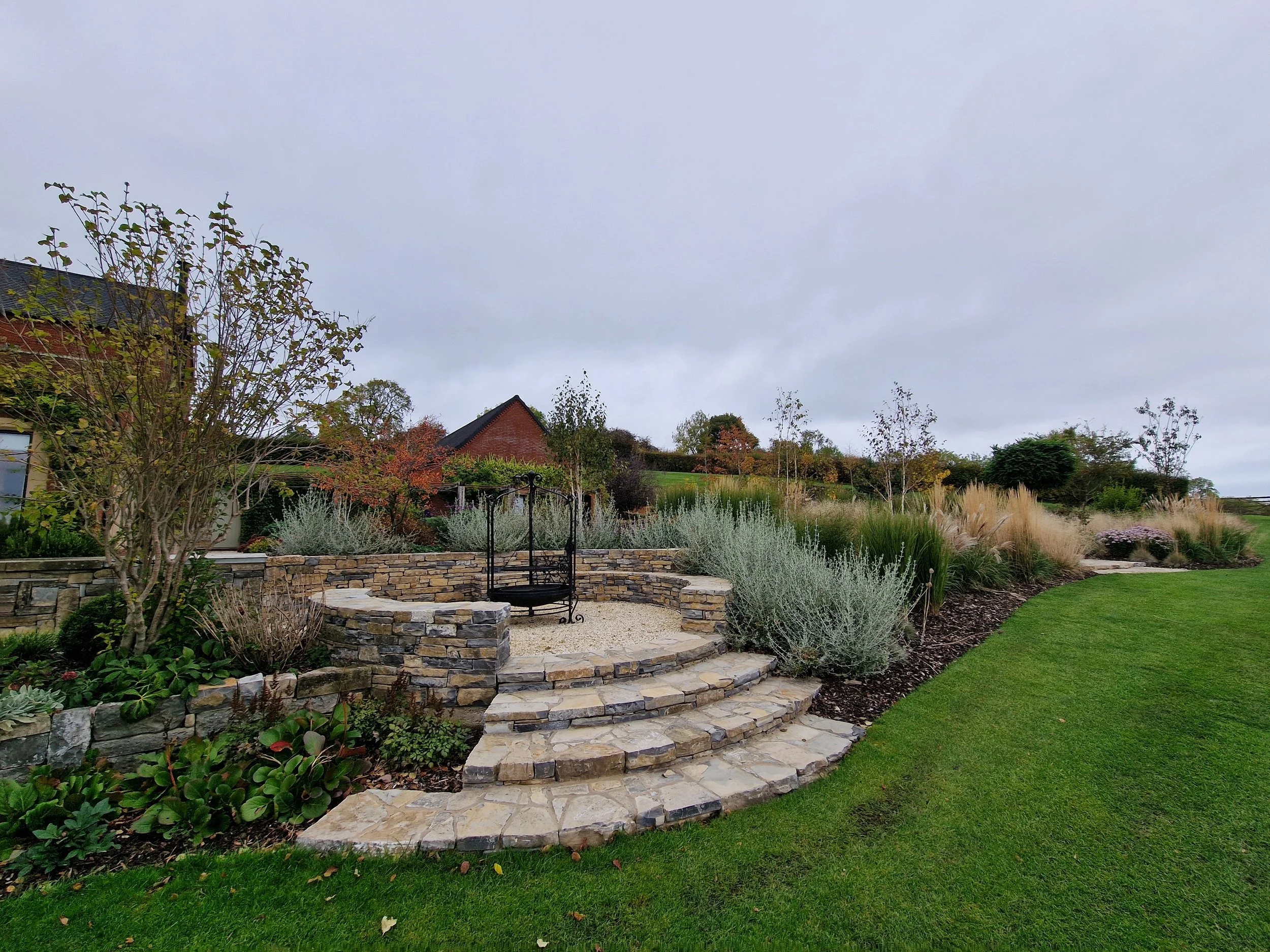
When people think about garden design, they often picture planting schemes, flowers, lawns and patios. While these are all important elements, professional landscape design considers much more than the individual features within an outdoor space.
A landscape designer looks at how the whole garden works, how different areas connect and how the space can respond to the needs of the people using it.
1. Understanding How You Want to Use the Garden
The starting point for any landscape design is understanding what the garden needs to provide.
Perhaps you want somewhere to relax, space for entertaining, a family-friendly garden or an attractive outdoor area that requires relatively little maintenance.
Different priorities will influence the layout, choice of features and overall design.
A garden should be planned around the way it will be used, rather than simply filled with features because they look attractive.
2. Creating a Practical Layout
The arrangement of different areas can make a significant difference to how a garden feels.
Paths, seating areas, lawns, planting beds and outdoor features need to work together.
A clear layout can help a garden feel more organised and make it easier to move between different areas.
In smaller gardens, careful planning can help make the most of limited space. Larger gardens may benefit from being divided into distinct areas, each with its own purpose.
3. Considering the Existing Site
Every garden has its own characteristics, and these need to be considered before a design takes shape.
The available space, ground levels, access, existing features and surrounding environment can all influence the possibilities.
Understanding these factors helps ensure the proposed layout is appropriate for the site, rather than simply choosing features that look attractive on paper.
4. More Than Choosing Plants
Planting is an important part of landscape design, but it needs to work alongside the wider layout.
Trees, shrubs, hedges and other planting can provide structure, privacy, screening and seasonal interest.
The choice of plants should also take account of the conditions within the garden and the level of maintenance the owner is comfortable with.
5. Hard Landscaping and Levels
Hard landscaping includes features such as patios, paths, steps, walls and other built elements within the garden.
These features influence both the appearance and functionality of an outdoor space.
Changes in level can also form an important part of the design. Depending on the site, they may help create separate areas, improve access or make better use of a sloping garden.
The practical requirements of the site need to be considered alongside the visual design.
6. A Garden That Works as a Whole
Good landscape design brings the different elements together into a coherent plan.
It considers how people will use the garden, how the features relate to one another and how the space will look and function over time.
Rather than making individual improvements without an overall direction, a considered landscape design provides a clearer picture of what the finished garden could become.
Conclusion
Planning a garden transformation?
Whether you want to redesign a small garden or rethink a much larger outdoor space, professional landscape design can help you explore the possibilities.
If your garden isn't working as well as you'd like, get in touch to discuss what you'd like to achieve and how a considered landscape design could help bring your ideas together.
