

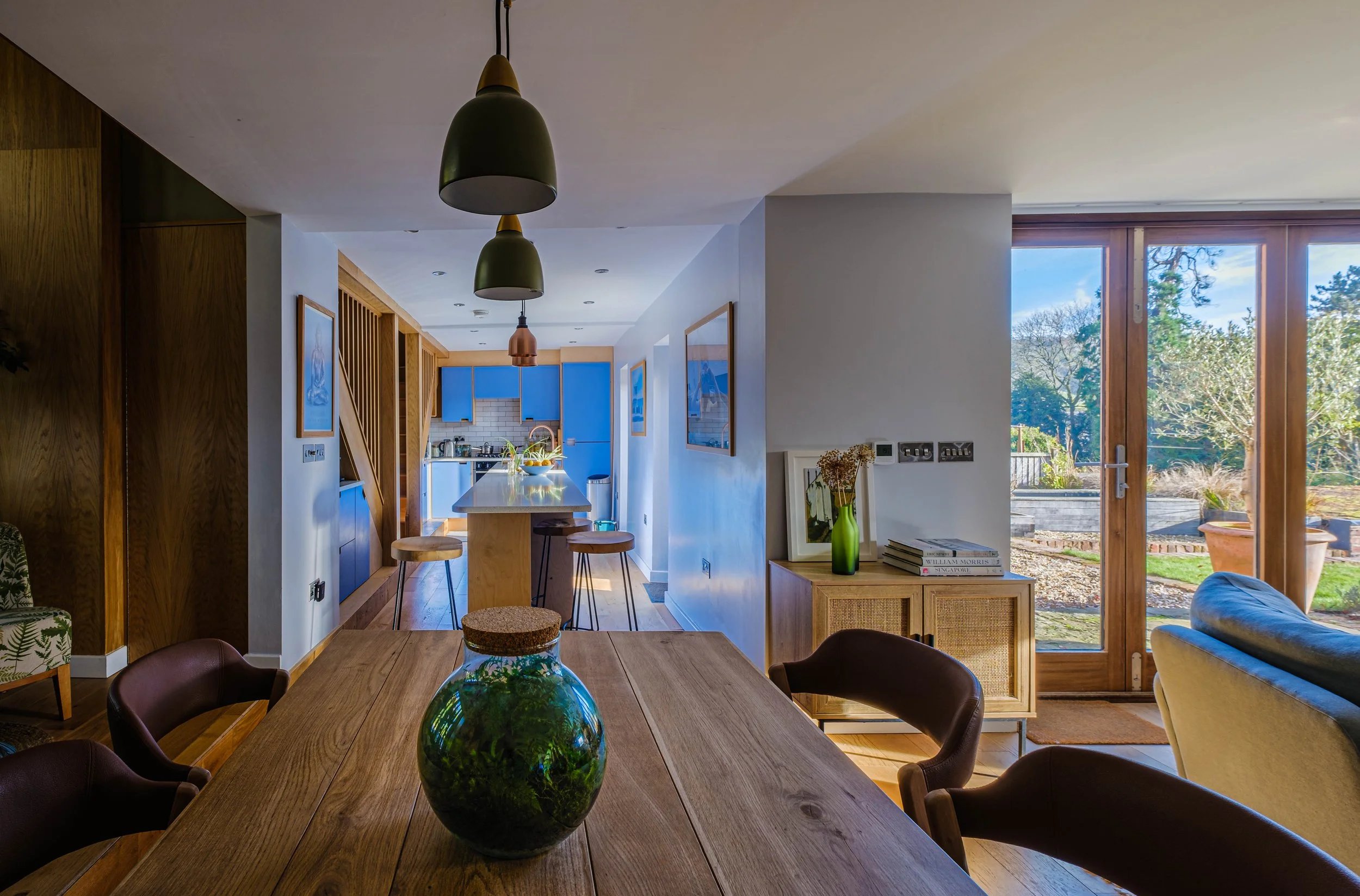
When a home starts to feel too small or no longer suits the way you live, the first thought is often to move or build an extension.
But before committing to a larger project, it is worth considering whether the existing space could work harder.
Good architectural design isn't always about adding more floor area. Sometimes the biggest improvement comes from making better use of the space already available.
1. Look at how you use your home
Think about how you move through the property during an ordinary day.
Are there rooms that rarely get used? Does the kitchen feel disconnected from the rest of the living space? Is there enough storage? Do you have somewhere suitable to work from home?
These everyday frustrations can help identify what needs to change.
A renovation project provides an opportunity to reconsider how the rooms are arranged and whether the existing layout still meets your needs.
2. Improve the connection between rooms
The relationship between different spaces can influence how a home feels.
A poorly arranged layout may create awkward circulation routes or leave areas feeling dark and disconnected.
Reconsidering door positions, openings and the arrangement of rooms can sometimes make a property feel more spacious and easier to use.
The aim is to create a layout that supports the way people live, rather than simply preserving an arrangement because it has always been there.
3. Make better use of natural light
Natural light is another important consideration when planning a home renovation.
A room may feel unwelcoming because of its position, the size or location of its windows, or the way it connects to neighbouring spaces.
Looking at how daylight enters the property and moves through the rooms can help inform decisions about openings, internal layouts and possible alterations.
4. Storage and practical details matter
A home can have plenty of floor space but still feel cluttered if storage hasn't been considered properly.
Built-in storage, utility areas, practical circulation routes and suitable spaces for everyday activities can all contribute to a more functional home.
These details may not be the most exciting part of a design, but they can make a real difference to how a property works.
5. When is an extension worth considering?
Sometimes the existing building simply cannot provide everything that's needed.
An extension may offer the opportunity to create additional living space, accommodate a growing family or improve the connection between the house and garden.
However, it is worth considering how an extension will affect the existing rooms, natural light, outdoor space and overall layout.
The best solution is the one that responds to the needs of the property and the people living in it..
6. When Should You Speak to an Architect?
It is often beneficial to involve an architect early in the planning of a building project. In fact, you don't need to have all the details worked out before making contact.
You might simply have a dream of creating more space, transforming your existing home or building something entirely new. You don't need to know exactly how it will work, what the layout should look like or how to overcome the practical challenges. That's where an architect's experience and expertise come in.
An architect can help explore the possibilities, develop your ideas into a workable design and identify what may be achievable within your budget.
Having an initial vision and a reasonable idea of your budget is a great starting point. From there, the design process can begin.
Conclusion
Make a home work for you.
A thoughtful home renovation can improve comfort, practicality and the way you use your property.
If you're considering alterations, a renovation or an extension, exploring the design possibilities before deciding on the scale of the work can help you make a more informed choice.
