

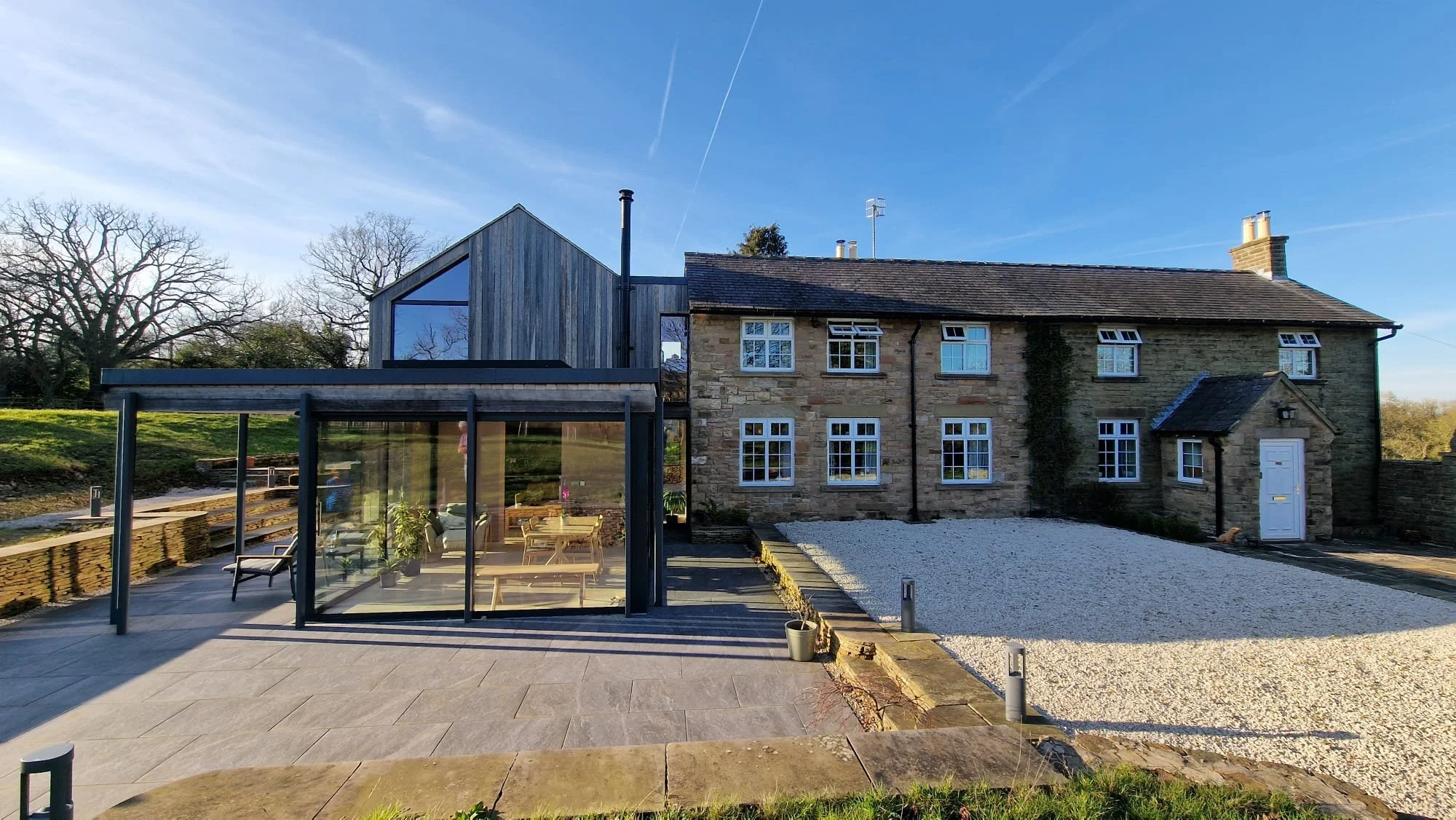
Adding an extension can transform the way a home works.
More space, better connections to the garden, a larger kitchen or an additional bedroom can all make a significant difference.
But extending a home isn't simply about adding a box onto the back of the existing building.
The location, existing architecture, site conditions and Scottish climate all need to be considered.
1. Start with the existing house
Before thinking about the new extension, look at the building that's already there.
What architectural style does it have?
What materials were used?
Where are the existing windows and doors?
How does the roof work?
How does the house sit on the site?
These details can help determine what sort of extension will work best.
2. Traditional homes can need a different approach
Across Dunoon and Argyll, there are many properties with traditional construction and distinct features.
Older solid masonry buildings can respond differently to moisture and temperature from modern construction.
Scottish Government guidance notes that traditional buildings often rely on porous masonry and ventilation to help manage moisture, so alterations need to take the existing construction into account.
3. Think about the Scottish weather
The West Coast climate should also form part of the design.
Driving rain can be a particular consideration for exposed buildings, and Scottish building guidance specifically requires buildings to be designed to prevent harmful moisture penetration.
The orientation of the extension, roof design, external materials, openings, drainage and connections between old and new construction all deserve careful thought.
4. Don't forget the garden
An extension can completely change the relationship between the house and garden.
You might gain valuable indoor space but lose part of the garden or alter how you move between inside and outside.
This doesn't necessarily have to be a disadvantage.
A well-designed extension can improve the relationship between the house and garden by introducing better views, larger openings or a more useful outdoor area.
5. Think about natural light
Adding floor area isn't necessarily enough.
The position of windows, rooflights and openings can have a major influence on how the new space feels.
Good design considers where natural light comes from and how the extension affects the existing rooms as well.
6. Modern doesn't have to mean out of place
There can be a temptation to make an extension either look exactly like the original building or completely different.
Neither approach is automatically right.
A contemporary extension can work very well alongside a traditional Scottish property when the proportions, materials and connection between old and new have been carefully considered.
Equally, a more traditional approach may be appropriate for another property.
Conclusion
Consider the whole project.
The best extensions aren't designed in isolation.
The building, garden, access, drainage, neighbouring properties, views, light and everyday use all form part of the picture.
Whether you're considering an extension in Dunoon, elsewhere in Argyll, or around Gourock, Greenock, Paisley or Glasgow, understanding the property and its surroundings before putting the design together can make the whole project more successful.
A good extension shouldn't simply give you more space.
It should make the whole home work better.
