

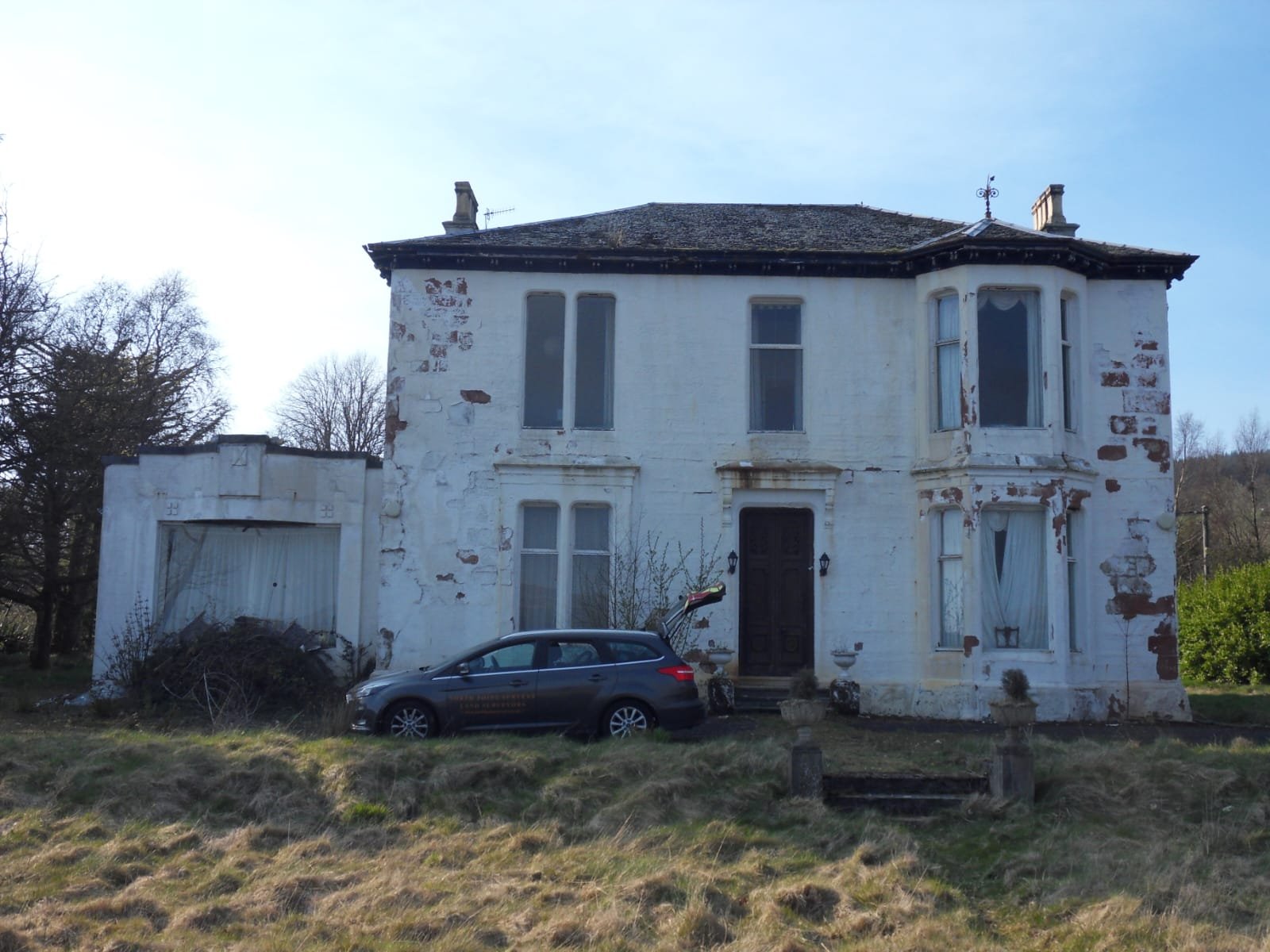
Before
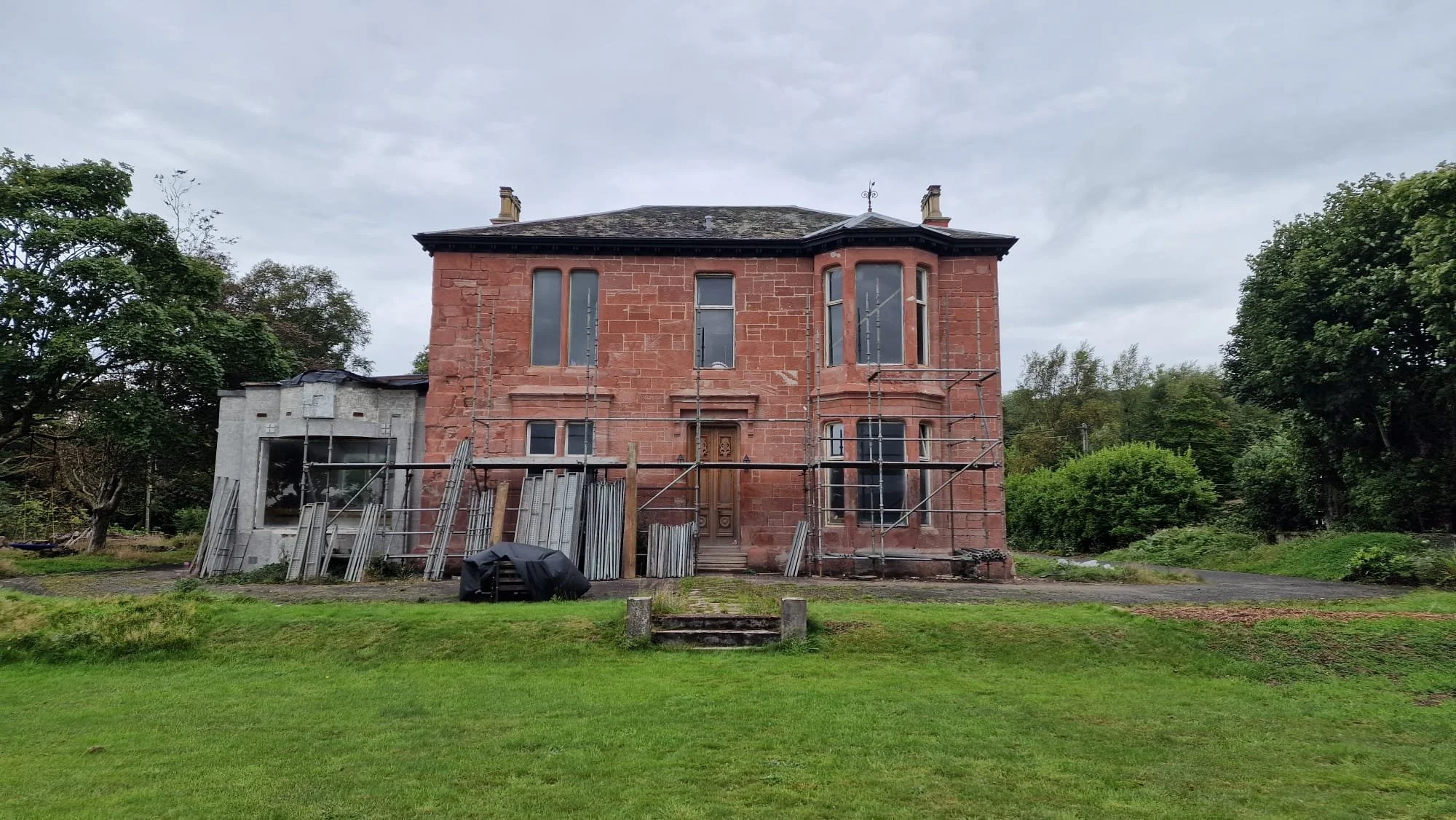
After
Walk around Dunoon, Argyll, Gourock, Greenock or parts of Glasgow and you'll see a huge variety of traditional Scottish buildings.
Stone properties, terraces, villas, cottages and tenements all have their own architectural character, and many were constructed using materials and methods very different from those used in modern homes.
When extending, renovating or altering an older property, understanding how the existing building works is an important part of good design.
1. Traditional buildings were designed for their environment
Many traditional Scottish buildings use solid masonry construction, timber floors and pitched roofs, often with slate coverings.
These buildings were constructed using traditional materials and methods that differ considerably from those used in modern homes. Understanding how these materials behave is essential when considering alterations or improvements.
Traditional buildings can rely on the mass of porous masonry and air movement to help manage moisture within the building fabric. This is particularly important when considering modern materials and finishes.
2. Stone walls behave differently
A solid stone wall doesn't necessarily behave like a modern cavity wall.
Traditional masonry can absorb and release moisture, so keeping an older building in good condition isn't simply a case of sealing everything up.
External ground levels, drainage, pointing, render and other alterations can all affect how moisture moves through the building. Understanding the existing construction before carrying out work can help avoid unintended consequences and support the long-term preservation of the property.
3. A real example: my own home
A solid stone wall doesn't necessarily behave like a modern cavity wall.
Traditional masonry can absorb and release moisture, so keeping an older building in good condition isn't simply a case of sealing everything up.
External ground levels, drainage, pointing, render and other alterations can all affect how moisture moves through the building. Understanding the existing construction before carrying out work can help avoid unintended consequences and support the long-term preservation of the property.
A real example: my own home
My own home provides a practical example of why understanding a building's history, materials and construction is so important.
The property combines an original Victorian building with a later Art Deco extension. Previously, both parts had been painted and rendered white in an attempt to bring them together visually.
In my opinion, this was a mistake. Rather than celebrating the individual character of the two architectural styles, the white finish attempted to make them look like one uniform building. It concealed the differences in their materials and obscured some of what makes the property distinctive.
More importantly, since removing the external coatings, I've found that the building fabric has dried out significantly. This has reinforced my view that the materials and finishes we choose for older properties matter for reasons beyond appearance alone.
Traditional buildings need to be understood in terms of how they work, not simply how they look. Applying modern finishes without considering the underlying construction can have consequences for the building fabric.
The approach I'm taking with my own home is to celebrate the differences between the original Victorian building and its Art Deco extension, allowing each to retain its own identity rather than trying to make them look the same.
The photographs show the house before the work and its more recent appearance, illustrating the difference between disguising the two architectural styles and allowing each to be appreciated in its own right.
4. Don't lose the character
An extension doesn't have to look old to work with an old house.
In some cases, a contemporary extension can provide an interesting contrast with an existing traditional building. In others, a more sympathetic approach may be appropriate.
The important thing is understanding the existing building and deciding what relationship the new work should have with it.
My own home is an example of how allowing different architectural periods to retain their individual character can create a more considered result. Rather than disguising differences, good design can recognise and celebrate them.
5. Windows, roofs and proportions
Traditional properties often have strong proportions and architectural details that give them their character.
Window openings, roof pitches, chimneys, stonework, slate, eaves and existing features can all influence how an extension or alteration sits alongside the original building.
Getting these relationships right can make a significant difference to the finished result. Rather than attempting to make every part of a property look uniform, thoughtful design can allow different materials and architectural styles to complement one another.
6. A building should still work for modern life
Respecting an older property doesn't mean freezing it in time.
People's expectations of their homes have changed. Modern kitchens, better insulation, improved layouts, home working and stronger connections to outdoor spaces can all be important.
Good design can improve how an older home works without removing everything that makes it distinctive. The challenge is finding the right balance between modern requirements, architectural character and the long-term performance of the building.
6. Looking at the whole property
Architecture and landscaping can work particularly well together when renovating older homes.
An extension may change the relationship between the house and garden. A new patio may affect ground levels around the building. A new opening may change how a room connects with the outside.
Considering these elements together can produce a much more coherent result, helping the house, its extensions and its surroundings work as a whole.
Whether you're working with a traditional property in Dunoon, a villa in Gourock, a stone property in Greenock, or a more urban home in Paisley or Glasgow, understanding the character and construction of the existing building should be part of the design process.
Conclusion
Older properties don't necessarily need to be made uniform to work well.
By understanding their materials, respecting their history and allowing different architectural periods to complement one another, we can create homes that work for modern life while retaining the qualities that make them special.
